
ACE AI FLIGHT TRAINING COURSES
LEARN FASTER FLY SMARTER
BE SAFER
The first step to the skies is into the classroom, studying for the FAA Knowledge Test. Hardly the romantic vision you had when you dreamed of flight. Thanks to Agentic Learning, there’s a better way. ACE your FAA Knowledge Tests with ACE, our AI-assisted, online Ground School program. We’ve revolutionized aviation training – faster, smarter and safer.
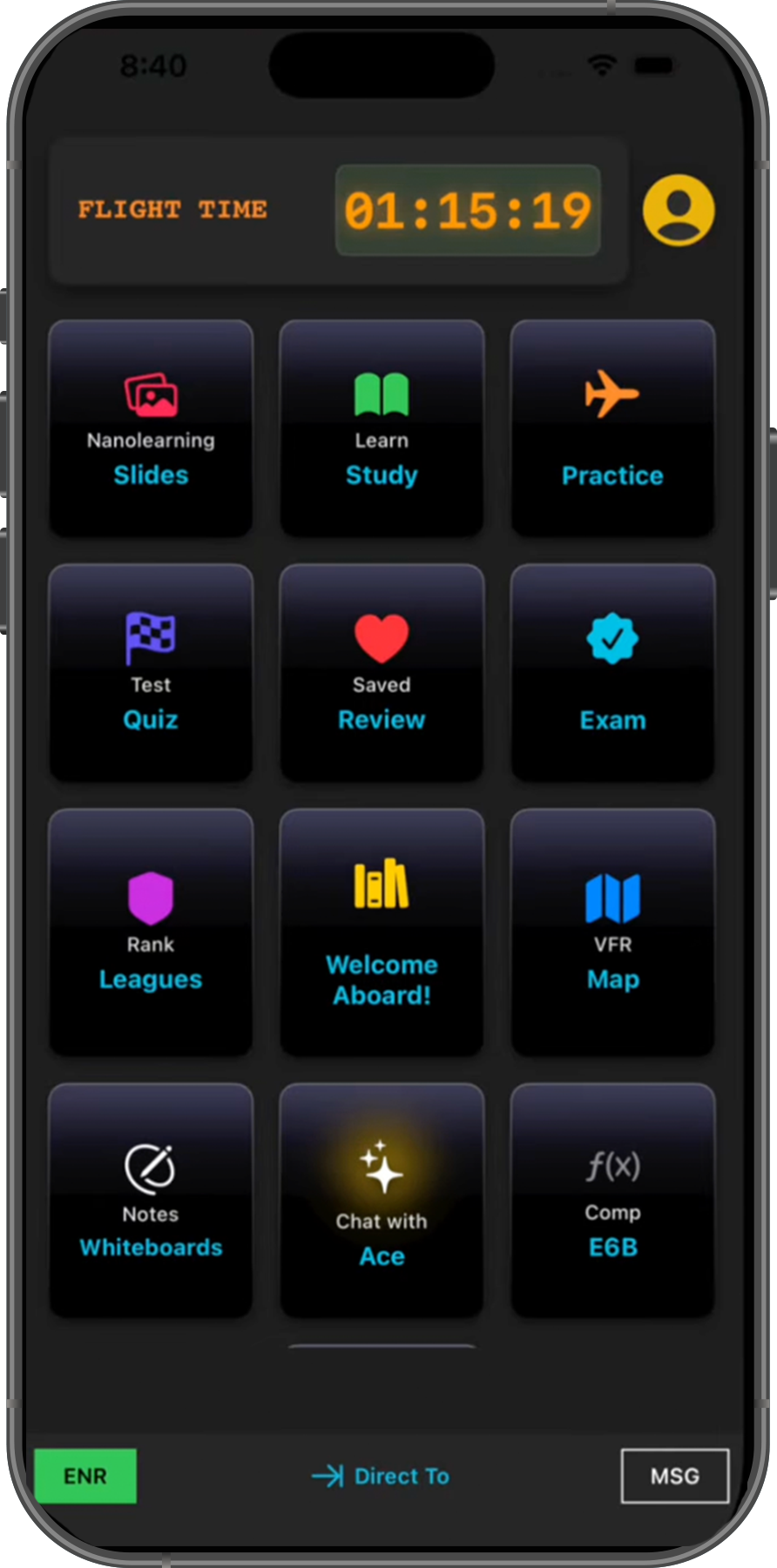
UNIT 1-3 | INTRODUCTION TO ACE AI FLIGHT TRAINING
UNIT 1: Your Introduction to ACE & Flying! In this first step to the skies, you’ll get to know your AI flight instructor and learn how it can supercharge your learning. Along the way, we’ll cover FAA Regulations for your private pilot license and best practices to make your journey as quick and easy as possible.
UNIT 2: Aircraft Construction. Before you understand how to fly, you have to understand your plane. Everything on it, down to the tiniest bolt, has a name and a job. By the end of Unit 2, Flight Construction, we’ll have taught you all of them, so when your flight mechanic asks what’s wrong, you’ll be able to answer with confidence.
UNIT 3: The Principles of Flight. This is where tons of steel lifting off the ground into the sky looks like magic, but it’s a well-established science. In Unit 3, you’ll learn the laws of physics that govern powered flight, including the four forces operating on your aircraft: lift, thrust, drag, and weight.
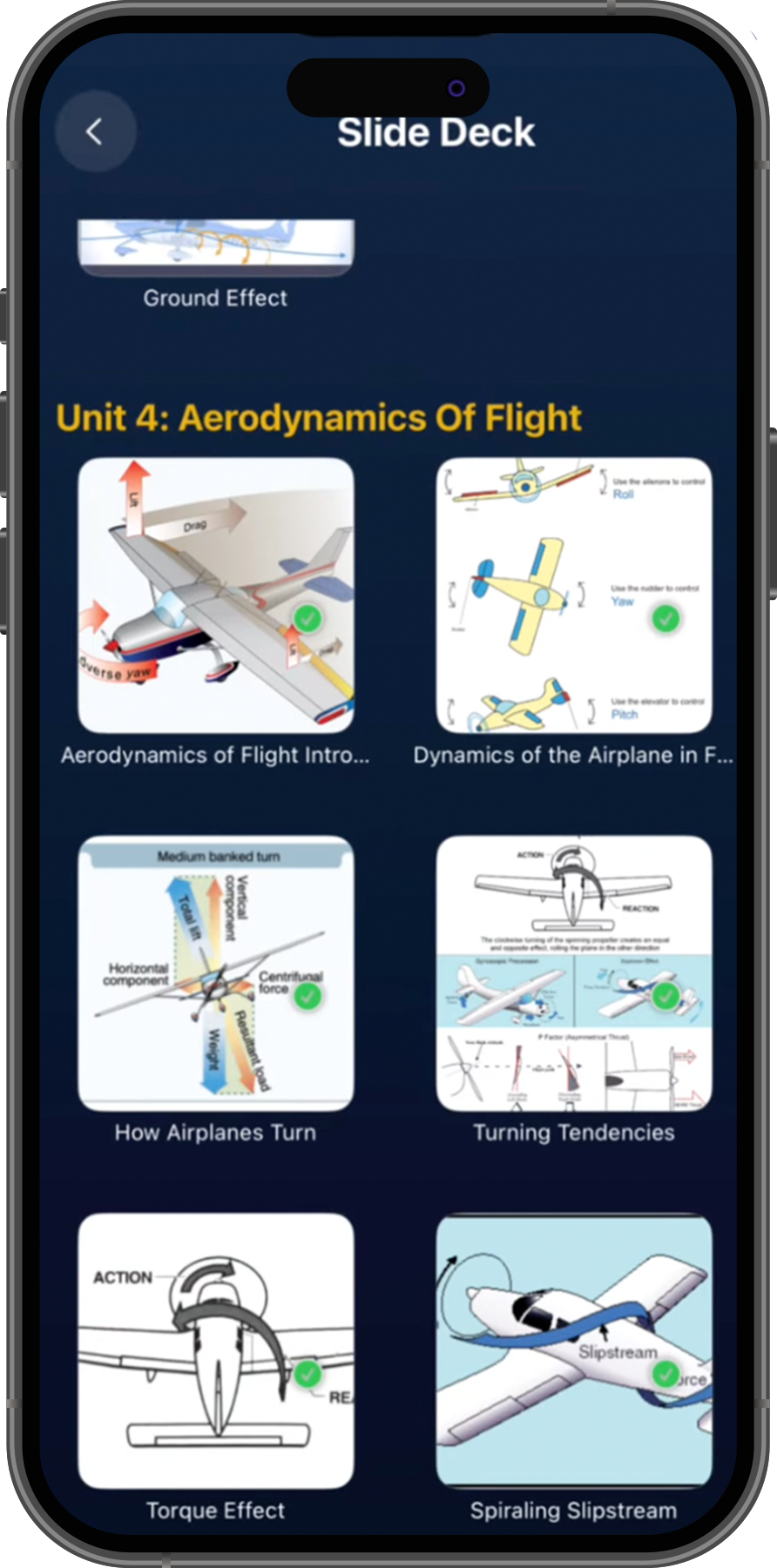
UNIT 4-6 | AERODYNAMICS OF FLIGHT, CONTROLS & SYSTEMS
UNIT 4: Aerodynamics of Flight. P factor, torque effect, stability. You may not know these now, but after Unit 4, the Aerodynamics of Flight, you’ll understand how these elements and others dictate how your plane moves through the air. This forms the basis of understanding for every lesson on control that follows.
UNIT 5: Flight Controls. With an understanding of the fundamental science under your belt, Unit Five turns to Flight Controls. You may think of it as just the yoke, but there’s so much more. We’ll teach you about ailerons, elevators, and how every tool on your aircraft helps you cut through the skies.
UNIT 6: With an understanding of the fundamental science under your belt, Unit six turns to Flight Controls. You may think of it as just the yoke, but there’s so much more. We’ll teach you about ailerons, elevators, and how every tool on your aircraft helps you cut through the skies.
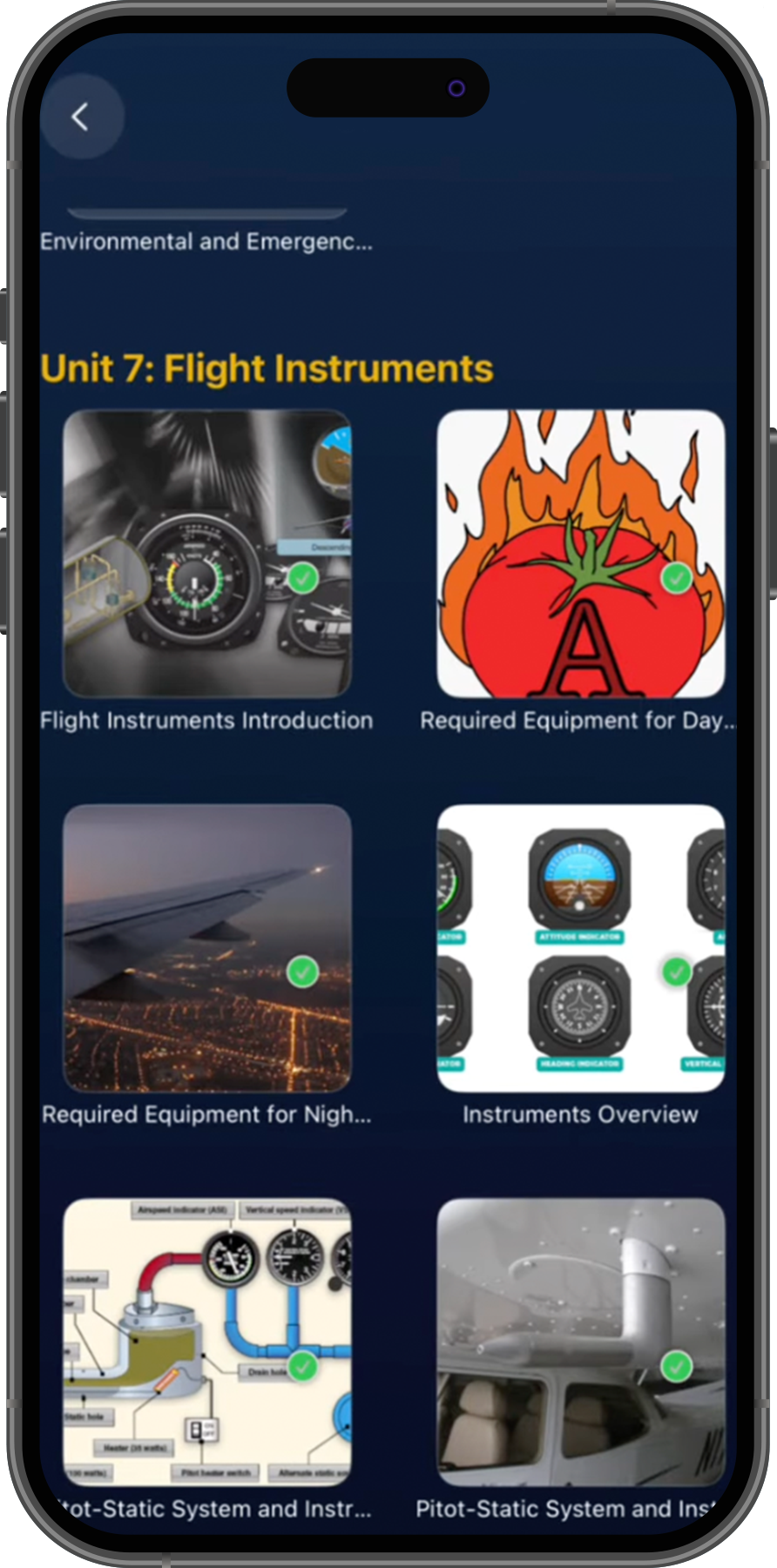
UNIT 7-8 | FLIGHT INSTRUMENTS & MANUALS
UNIT 7: For Unit 7, we’ll be discussing the Flight Instrument six-pack: altimeter, air speed indicator, turn coordinator, attitude indicator, heading indicator, and vertical speed indicator. Flying by sight alone can mislead you, but knowing how to read these vital tools will keep you on target.
UNIT 8: Flight Manuals & Documents. In Unit 8, we’ll teach you about Flight Manuals & Documents. Not just boring paperwork, your airplane flight manual and pilot operating handbook are your flight bibles. Most importantly, we’ll cover the pre-flight checklist and explain why you can’t skip a single one.
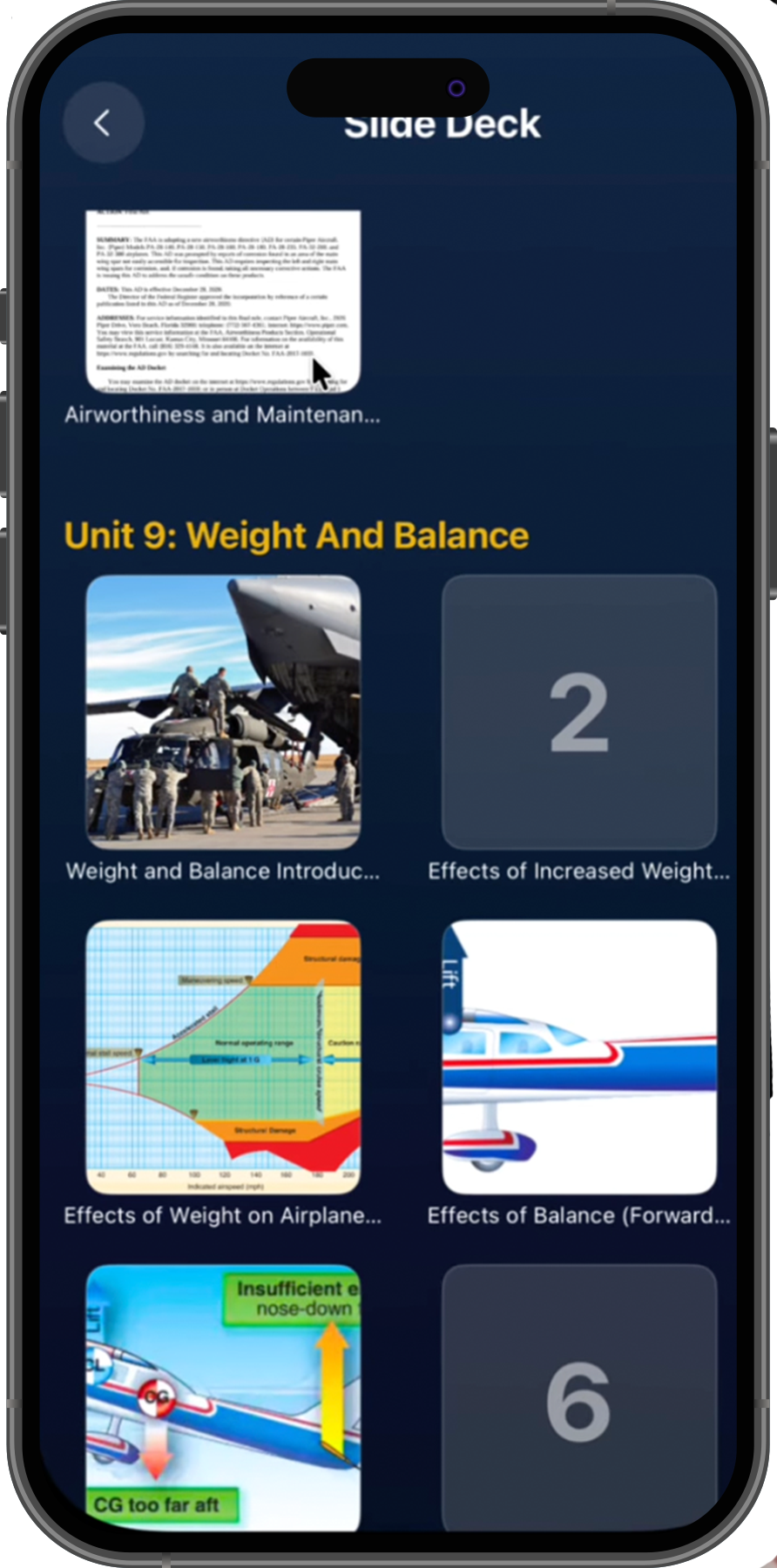
UNIT 9 | AIRCRAFT WEIGHT BALANCE
UNIT 9: In Unit 9, we’ll do an in-depth dive on Weight and Balance, two of the most important elements in flight. Weight will determine how much fuel you need, how long you can fly, and what you can carry. Balancing your crew, passengers, and cargo will keep your plane’s center of gravity where it needs to be. Combined mastery will keep you in control of gravity, instead of the other way around.
UNIT 10 -11 | AIRCRAFT PERFORMANCE & WEATHER THEORY
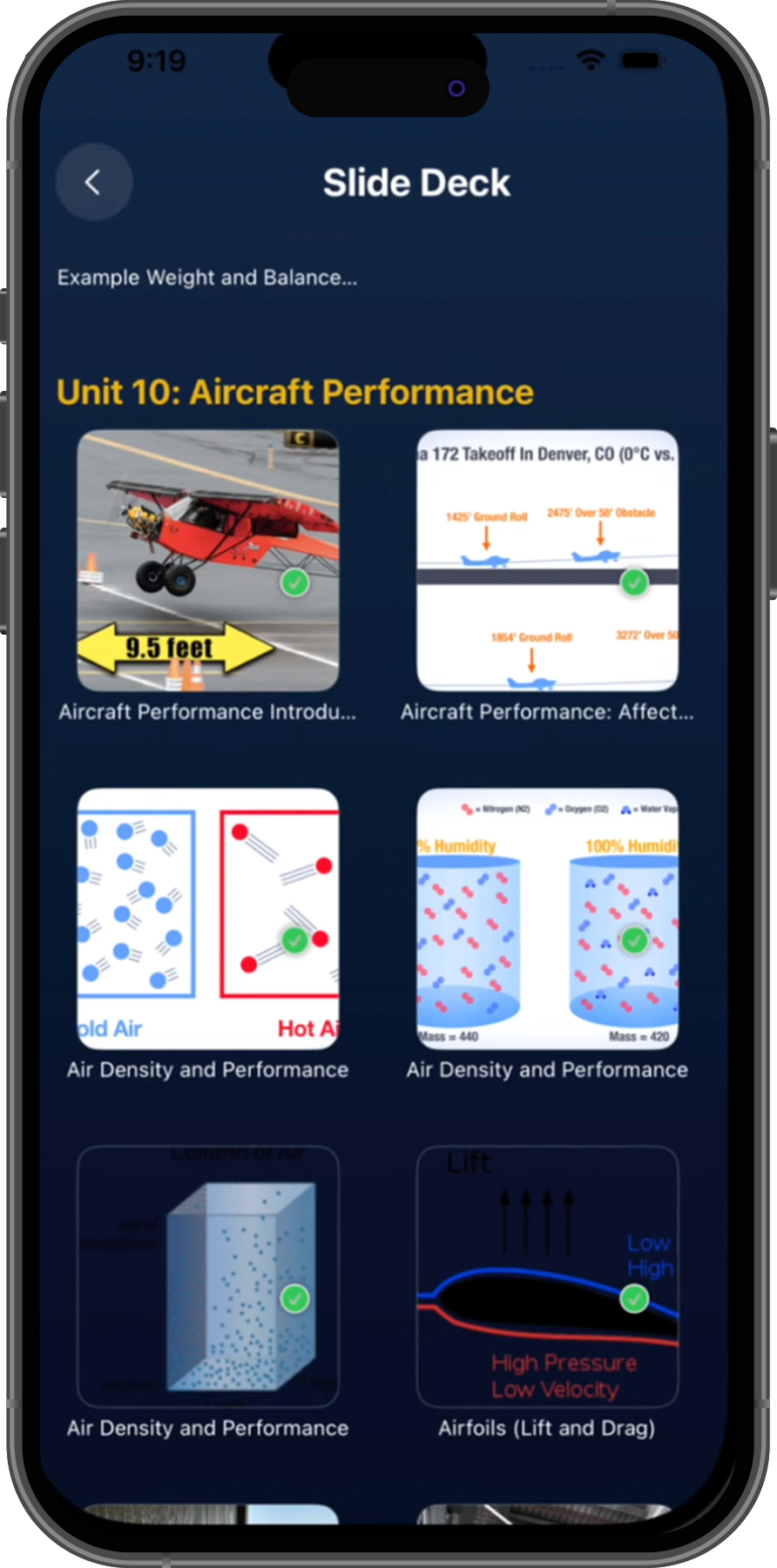
UNIT 10 : Unit 10 is all about Aircraft Performance: how well your engine performs in the unique conditions of every flight, such as elevation, design, and local weather. By the end, you’ll understand the exact calculations required to predict how your plane will handle takeoff, climb, cruise, and landing.
UNIT 11 : Weather Theory. The first of two weather-based units, Unit 11 covers Weather Theory. Modern weather forecasting is a marvel, but it’s not enough. You need to understand the why behind wind, clouds, and rain. We’ll help you understand the physics so you can make your own judgments and verify the report.
UNIT 12 -14 | AVIATION WEATHER SERVICES
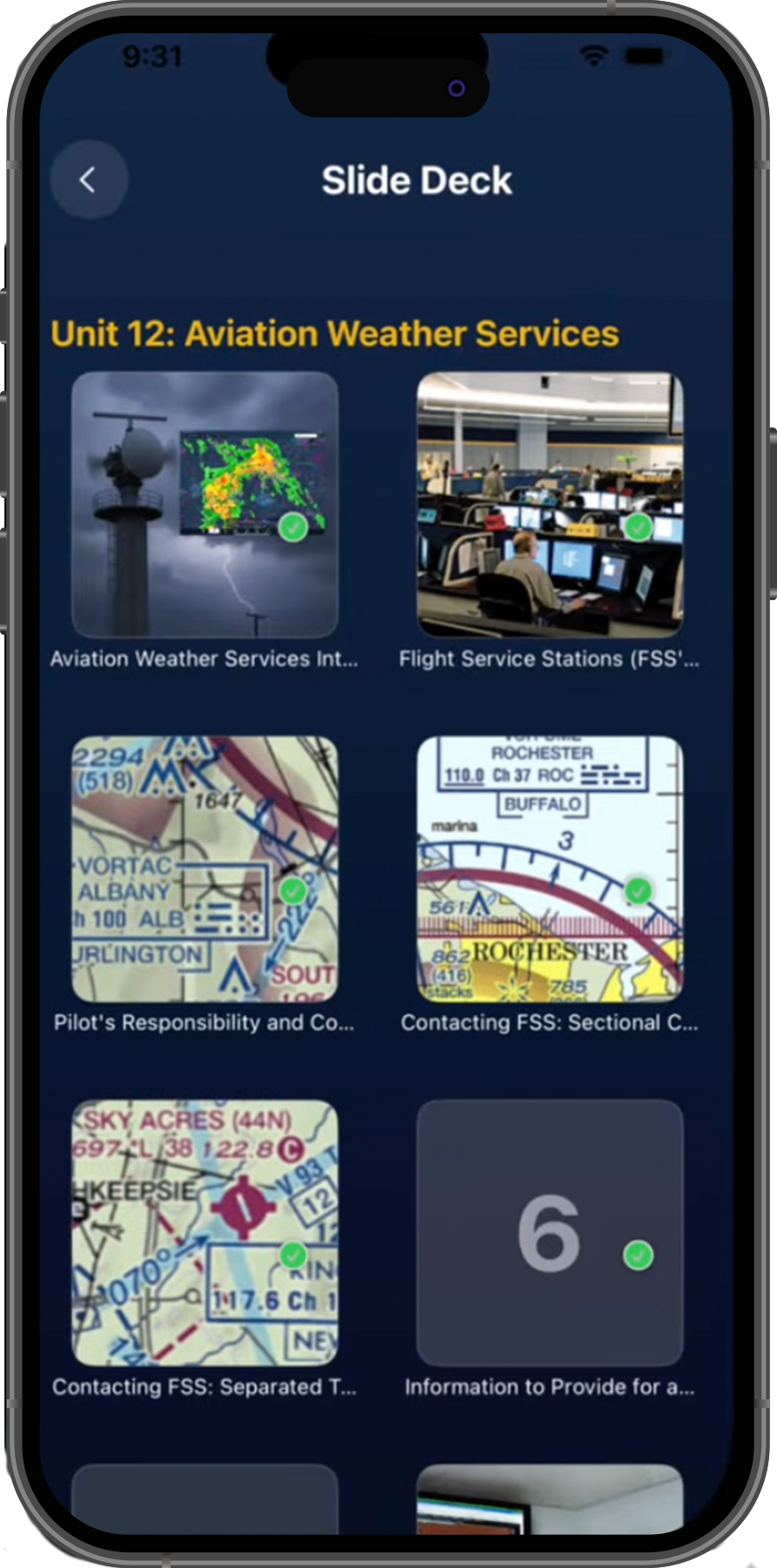
UNIT 12 : In Unit 12, we cover Aviation Weather Services – how you can move beyond signs and sailors’ warnings and into modern weather prediction. We’ll give you the tools to gather weather briefings and interpret updates so you can make the right decision now before the storm even hits.
UNIT 13 : Airport Operations. Piloting isn’t just what happens in the air – you need to understand Airport Operations as well. In Unit 13, we’ll teach you about runways, taxiways, traffic patterns, wake turbulence, and more. You’ll learn how ground services work behind the scenes to keep your flight safe and supported. Most importantly, we’ll cover radio communications – how you’ll talk to and coordinate with your fellow pilots and air traffic control.
UNIT 14 : Airspace. We dream of an empty blue sky, but the truth is that Airspace has been sliced up with the precision of an expert butcher. In Unit 14, we’ll teach you how to read sectional charts and mind where you can and can’t go so you don’t end up as a footnote in someone else’s radar log.
UNIT 15 -16 | FAA & AIM
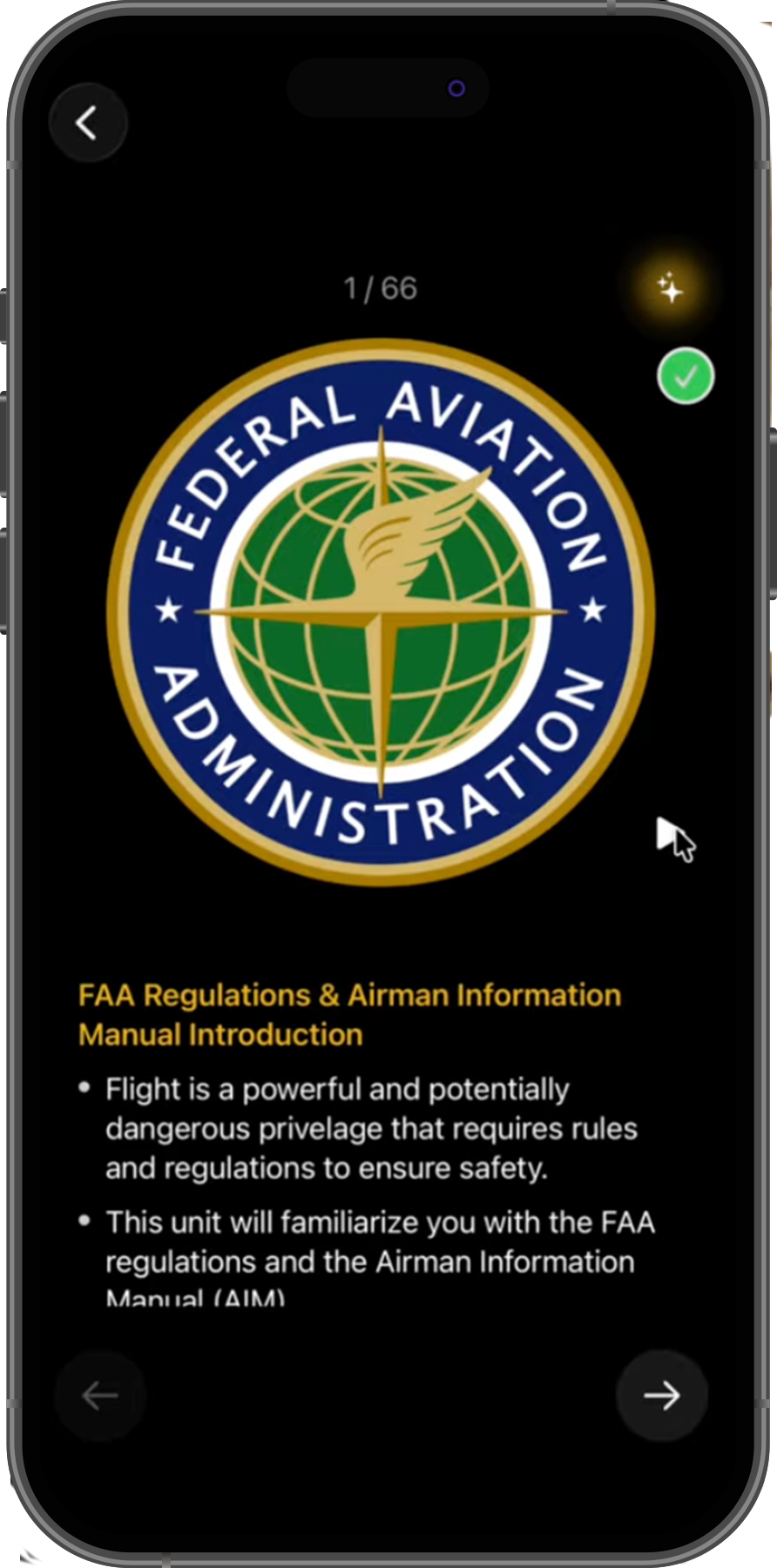
UNIT 15 : Now that you have a map, it’s time to learn the rules of the road. In Unit 15, we’ll teach you the FAA Regulations & the Airman Information Manual. These books are the bibles of flight safety instructions. By the end of this unit, we’ll help you learn them as well as you know the driving laws here on the ground.
UNIT 16 : Aeronautical Decision Making. Unit 16 is about the most important tool on any aircraft: you, the pilot. Aeronautical Decision Making is more than just what you do with the stick and rudder – it’s every decision you make leading up to the takeoff. We’ll teach you to map out every inch of the trip in your mind. By the end, you’ll know how to make decisions that mitigate unavoidable risk to acceptable levels.
UNIT 17 | AEROMEDICAL FACTORS
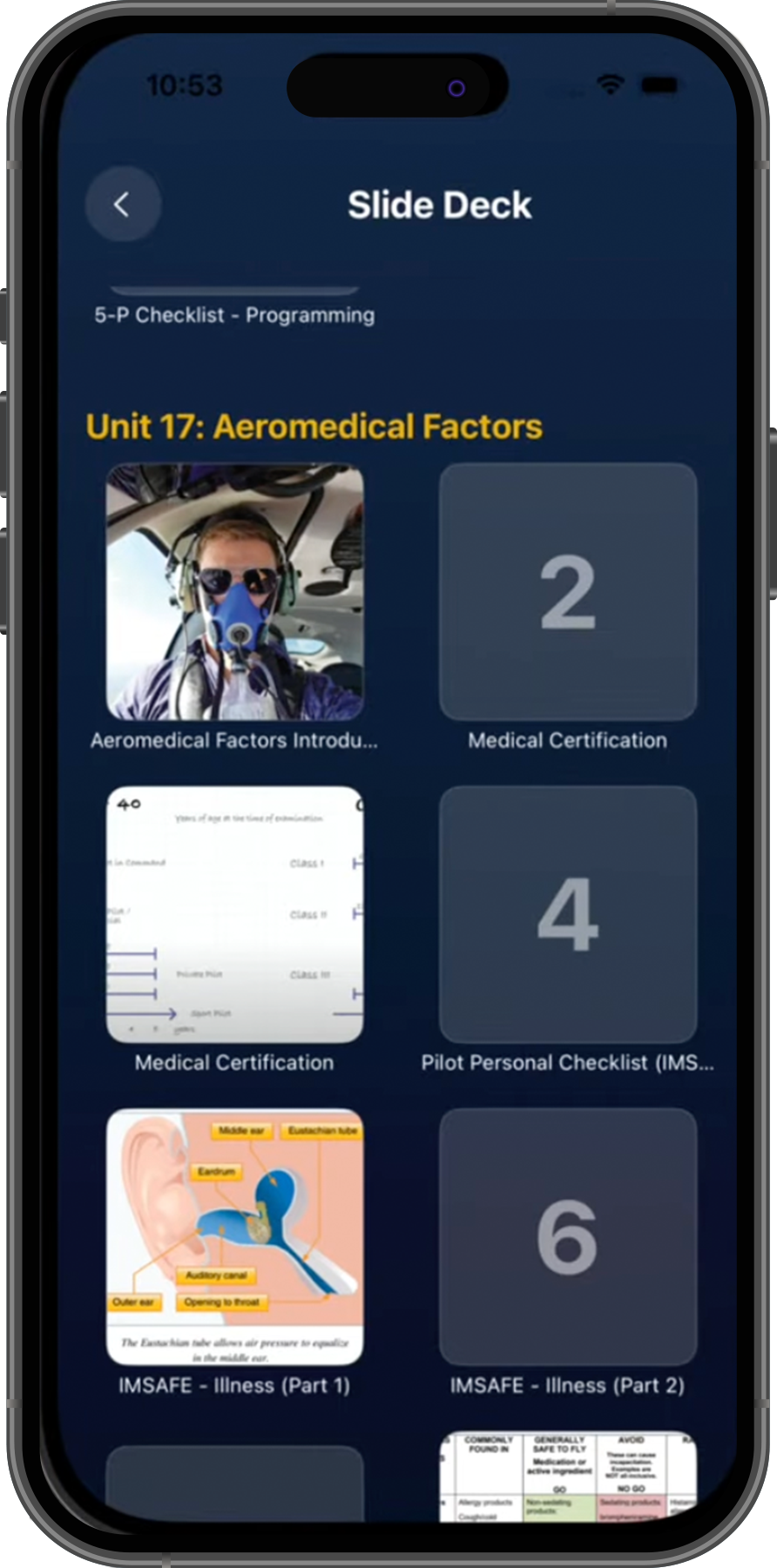
UNIT 17 : Unit 17 is our second course about the pilot and covers Aeromedical Factors. Your mind and body are a complex, interconnected system. Lack of sleep, a head cold, and skipping breakfast can all affect your judgment. But so can flight-specific conditions, like hypoxia and spatial distortion. We’ll give you the tools you need to keep your body healthy and your judgment clear.
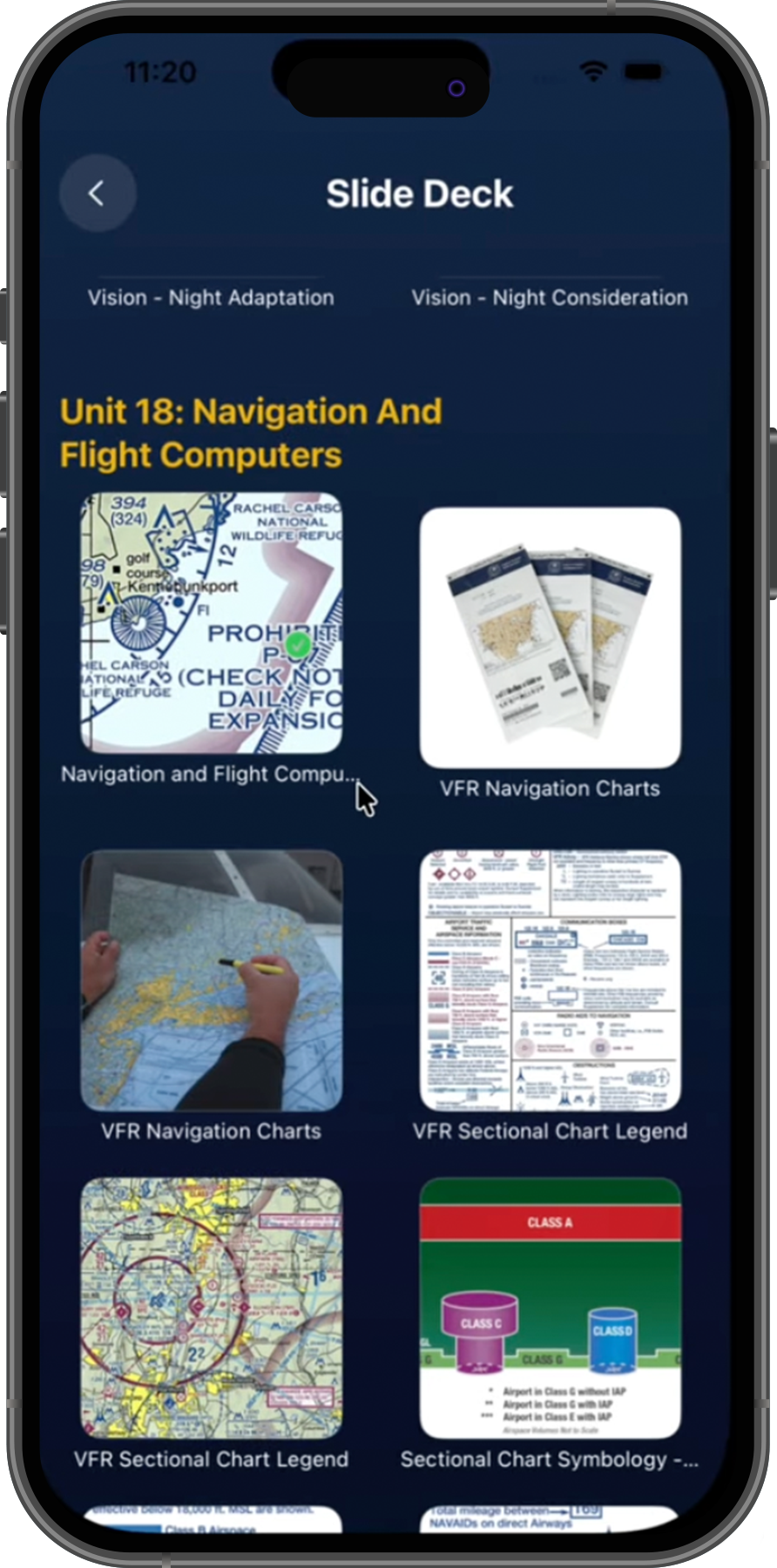
UNIT 18-20 | NAVIGATION & FLIGHT COMPUTERS
UNIT 18 : The sky is no place to wander, so in Unit 18, we’ll teach you about Navigation & Flight Computers. You’ll learn how to read paper VFR Sectional Charts and operate modern E6B flight computers, so you know how to set a proper heading.
UNIT 19 : Navigation Systems, is a deep dive into modern electronic navigation tools. You’ll learn how modern GPS became the primary cockpit navigational tool as well as how to use ground-based systems like the VOR. Combined with the previous unit, you’ll be able to chart a course with confidence, leading to our final unit.
UNIT 20 : Unit 20 brings everything together to teach you Cross Country Flight Planning. We’ll teach you how to do aeronautical charts, plot the course, select the checkpoints, review the weather briefing, make a fuel plan, and file a flight plan. It’s time to take off, Ace your test, and get into the skies!
TAKE OFF WITH ACE
(518) 289-0488
info@aiflighttraining.us
ACE AI
Flight Training
Enrollment Subscription
$250.00 / year
$119.99
/ year
- Personalized flight training
- Unlimited flight training sessions
- Unlimited flight resources
- Save time and money learning to fly
Cancel anytime · Instant access on enrollment